Custom Search
|



|
Dermpath-India Pathology of Granular Cell Tumour Dr Sampurna Roy MD 2022
|
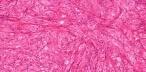
Granular cell tumor (GCT) is a rare benign neoplasm of the skin that accounts for 0.5% of all soft-tissue tumors. The granular cell tumor was first described by Abrikossoff in 1926 ( also known as Abrikosoff’s tumours).This first report was of a granular cell tumor of the tongue. According to some authors this tumour is probably of Schwann cell origin. Most
granular cell tumours
are benign, yet malignant forms have been sporadically reported. Only
10 to 15 % of granular cell tumours
are multicentric. The tumour also occur
on the head and neck region and in the larynx, stomach, vulva and anogenital region. Dermatopathology Quiz Case 141
Immunohistochemistry: The tumour cells show positivity with S100 protein, neuron-specific enolase, vimentin, PGP9.5 and melanoma-associated antigen (NK1/C-3). The pan-macrophage marker, CD68 (Kp1) reacts strongly with granular cell tumour. Features indicating malignancy: Tumour size more than 5 cms, presence of vascular invasion, necrosis and rapid growth. Other features include brisk mitotic activity(>2/10 high-power fields), pleomorphism, presence of spindling of cells and angiogenesis. Three or more of these features are required for a malignant diagnosis. If fewer than 3 are present, the tumour is considered to be “atypical granular cell tumor” and typically has a good prognosis if fully excised. If metastatic lesions are found in bone, lymph nodes, peripheral nerves, peritoneal cavity or lungs - the prognosis is usually very poor. Variants: 1) Gingival Granular Cell Tumour of Newborn (Congenital Epulis) 2) Primitive Polypoid Granular Cell Tumour: (Syn: "Dermal non-neural granular cell tumor" ; "Primitive nonneural granular cell tumors of skin") Primitive nonneural granular cell tumor of the skin was first described by LeBoit et al in 1991 as "primitive polypoid granular cell tumor". The tumours are composed of elongated spindle-shaped to polygonal or round cells with prominent granular cell change. The tumour nuclei may show mild focal atypia to moderate atypia. There is brisk mitotic activity. The cells do not stain for S100 protein. These tumours are different from classic granular cell tumor by lacking neural differentiation.
|
|
|