Custom Search
|



|
Infectious Disease Online Pathology of Omsk Hemorrhagic Fever
|
| Omsk hemorrhagic fever
virus,
is the only
known tick-borne flavivirus to cause hemorrhagic disease in humans in the
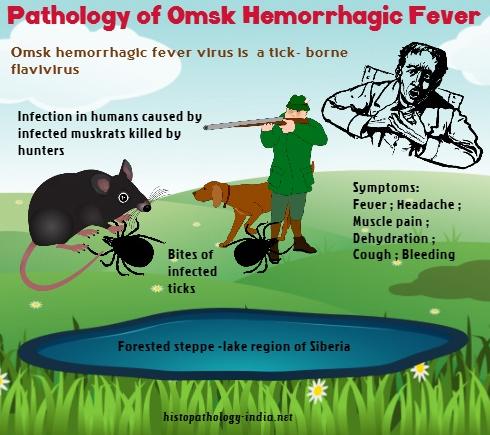
absence of encephalitis. Omsk hemorrhagic fever resembles Crimean fever and was first described in the Asiatic USSR (1947). Endemic to the forested steppe-lake region of western Siberia, its animal reservoir is principally rodents. Infections in humans come from the bites of infected ticks or from contact with muskrats killed by hunters, in which case the muskrats were bitten by ticks infested with the virus from small rodents. Omsk hemorrhagic fever virus can be transmitted through the milk of infected goats or sheep and isolated from aquatic animals and water. Symptoms of Omsk hemorrhagic fever virus includes fever, headache, severe muscle pain, cough, dehydration, gastrointestinal symptoms and bleeding problems. After 1-2 weeks of symptoms, some patients recover without complication. In most patients in the beginning of the third week the symptoms include fever and signs of encephalitis. The diagnosis is made by virus isolation from blood or by serologic testing using enzyme-linked immunosorbent serologic assay (ELISA). |
|
|