Custom Search
|



|
Infectious Disease Online Pathology of Neurosyphilis
|
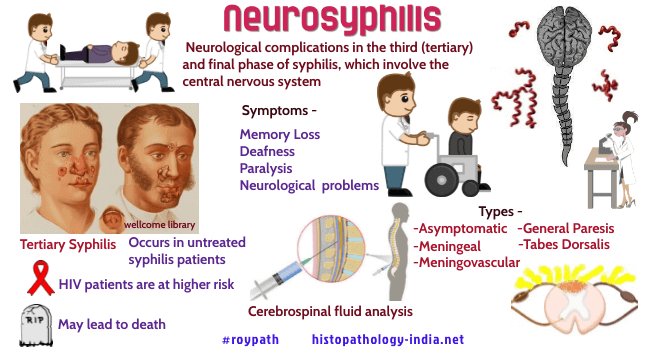
Syphilis, caused by the bacterium Treponema pallidum, is able to invade the central nervous system. As many as 40% of patients will have neuroinvasion of syphilis but most will not exhibit symptoms of neurosyphilis. Early neurosyphilis typically occurs within the first years of infection and can manifest as meningitis (symptomatic or asymptomatic), otosyphilis, ocular syphilis, and meningovascular syphilis. Later phase syphilis (usually one to two decades after initial infection) can result in the syndromes of tabes dorsalis and general paresis. Neurosyphilis is a disease of the coverings of the brain, the brain itself, or the spinal cord. It can occur in people with syphilis, especially if they are left untreated. Tertiary syphilis of the central nervous system (neurosyphilis) has many manifestations, which involve the meninges (with reactivation of the infection that began during secondary stage, the arteries and parenchyma of the cerebral cortex. People with HIV/AIDS are at higher risk of having neurosyphilis. There are five types of neurosyphilis: asymptomatic neurosyphilis, meningeal neurosyphilis, meningovascular neurosyphilis, general paresis, and tabes dorsalis. Asymptomatic neurosyphilis means that neurosyphilis is present, but the individual reports no symptoms and does not feel sick. Meningeal syphilis can occur between the first few weeks to the first few years of getting syphilis. Individuals with meningeal syphilis can have headache, stiff neck, nausea, and vomiting. Sometimes there can also be loss of vision or hearing.
Meningovascular syphilis is characterized by an obliterative endarteritis of the meningeal vessels with subsequent arterial thrombosis and ischemic necrosis in the brain and spinal cord. Meningitis may also irritate the brain, causing grand mal or focal seizures, and may damage cranial nerves at the base of the brain. Parenchymatous neurosyphilis is characterized by selective destruction of neurons, a process that leads to “general paresis of the insane”. Paretic neurosyphilis : In paretic neurosyphilis the walls of small vessels are thickened, and variable numbers of lymphocytes surround vessels. There are reduced numbers of neurons and rod microglial forms can be seen. The features, then are those of a smoldering inflammatory process that leads to gradual destruction of neurons, eventually becoming manifest in gross atrophy. This syndrome starts with gradual loss of higher cognitive functions and progresses through various personality changes to dementia. Patients show impaired judgment, loss of memory, confusion, disorientation, grandiose but poorly developed delusions, hyperactive reflexes, and optic atrophy. Inflammation of the dorsal roots causes secondary destruction of the dorsal columns (tabes dorsalis), a disorder characterized by loss of senses of joint position and vibration,wide-based gait, footslap,paresthesias of lower limbs, impotence, and episodes of intense referred pain (tabetic crisis). There may also be secondary, degenerative arthritis of one or more large joints (Charcot’s joints). Sometimes there is simultaneous involvement of the parenchyma of both the spinal cord and the brain (taboparesis), usually preceded by generalized paresis.
Visit: Pathology of Syphilis;
|
|
|